


Why Consistency Between Home and School Helps Children Thrive
Parents and educators share the same goal: helping children succeed. Yet one of the most overlooked factors in a child's growth isn't a specific curriculum or behavior strategy—it's consistency.
When children experience similar expectations, routines, and encouragement at home and at school, they're better equipped to learn, regulate their emotions, and build confidence. At Bright Connections Behavioral, we've seen how collaboration between families and schools creates
meaningful progress that extends far beyond the classroom.
What Does Consistency Really Mean?
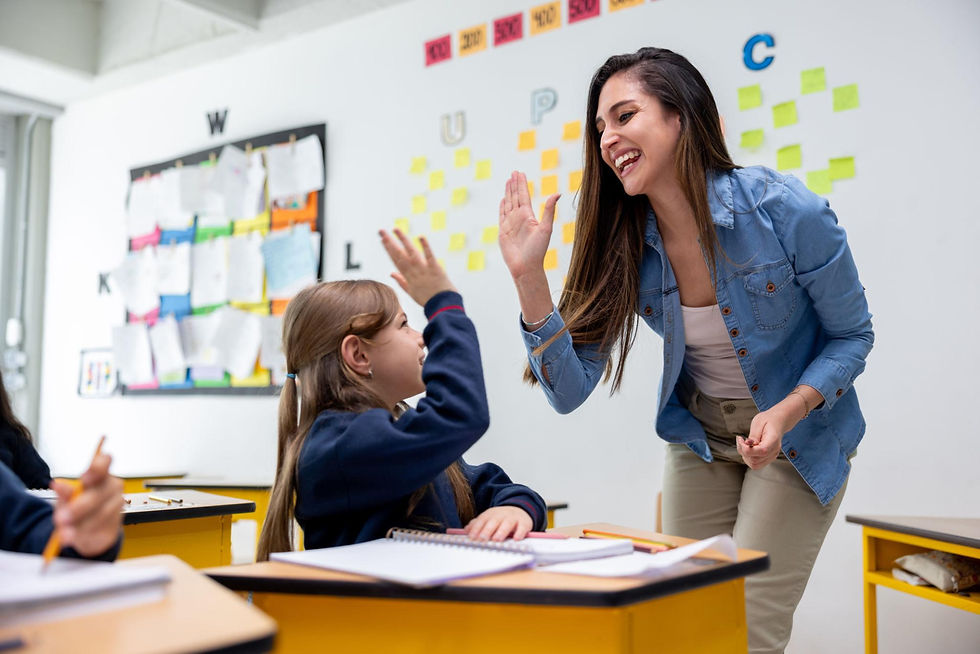
Consistency doesn't mean every classroom or every home has to look exactly the same.
Instead, it means the adults in a child's life are working together to provide:
Clear expectations
Predictable routines
Similar language when giving directions
Positive reinforcement
Open communication
Children thrive when they know what to expect, regardless of where they are.
Why Consistency Is So Important
It Creates a Sense of Security
Children feel more confident when routines and expectations are predictable. Knowing what comes next reduces uncertainty and helps them focus on learning instead of figuring out new rules in every environment.
It Reduces Confusion
Imagine being told one thing at school and something completely different at home. Mixed messages can make it harder for children to understand expectations and respond appropriately.
When adults work together, children receive a clearer message about what success looks like.
It Strengthens Positive Behaviors
Positive behaviors develop through repetition and reinforcement.
When teachers and families celebrate the same skills—such as following directions, communicating appropriately, or using coping strategies—children have more opportunities to practice and succeed.
It Makes Transitions Easier
Many children find transitions challenging, whether it's moving between activities, classrooms, or home and school.
Consistent routines and expectations can make these transitions smoother and reduce anxiety.
It Builds Independence
Children become more independent when they understand expectations and know how to meet them.
Rather than relying on constant reminders, they begin developing confidence in their own abilities.
What Does Collaboration Look Like?
Strong school partnerships don't happen by chance.
They grow through intentional communication and shared goals.
Collaboration might include:
Regular communication between families and educators
Classroom observations
Shared behavior strategies
Progress updates
Professional consultation
Celebrating successes together
Even small conversations can lead to meaningful improvements.
How Bright Connections Behavioral Supports School Partnerships
At Bright Connections Behavioral, we believe every child deserves a team that works together.
Our school partnerships are designed to support educators, empower families, and provide individualized strategies that help students succeed academically, socially, and behaviorally.
Whether through classroom consultation, professional development, behavior support, or collaboration with families, our goal is to strengthen the connections that help children thrive.
Simple Ways Families and Schools Can Work Together
Building consistency doesn't have to be complicated. Here are a few practical ways to strengthen collaboration:

Share successful strategies between home and school.
Use similar expectations whenever possible.
Celebrate progress, no matter how small.
Maintain open and respectful communication.
Focus on solving challenges together rather than assigning blame.
Remember that every child learns differently.
Every Child Benefits from a Team
When families, educators, and behavioral professionals work together, children experience something powerful: consistency.
They feel supported.They know what's expected.They gain confidence.And they're given every opportunity to succeed.
At Bright Connections Behavioral, we're proud to partner with schools and families to create environments where students can grow, learn, and reach their fullest potential.
Together, we can build stronger connections that lead to brighter futures.

Comments